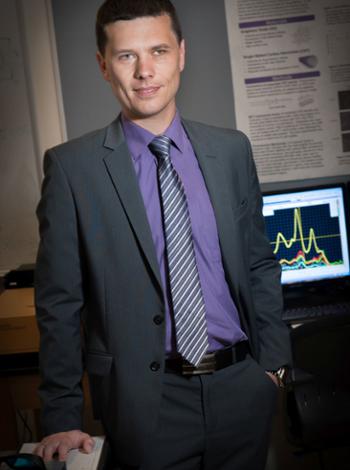
Anton Naumov, Associate Professor of Physics and Astronomy, Texas Christian University – Biophysics, nanoparticles
Title: Carbon – the basis of life on the nanoscale
Abstract: Carbon has always been our quiet partner—from charcoal and pencil lead to diamond—but its most surprising chapter unfolds in a trio of nanoscale allotropes shaped by dimensionality. In one dimension, carbon nanotubes (rolled sheets of sp² carbon) behave like atom-thin fibers: extraordinarily strong, light, and electrically versatile, with chirality that toggles metallic or semiconducting behavior; they’ve toughened composites in sports and aerospace, suppressed electromagnetic interference, and enabled sensitive strain and chemical sensors. In two dimensions,graphene—a single, honeycomb sheet—exhibits massless Dirac-like carriers, high thermal conductivity, and optical transparency, translating into flexible transparent electrodes, faster-charging energy-storage devices, corrosion barriers, and molecularly selective membranes for cleaner water. Shrunk to zero dimensions, graphene quantum dots introduce quantum confinement and abundant edge chemistry, producing bright, tunable photoluminescence in water-friendly, low–heavy-metal platforms; these traits power bioimaging and point-of-care sensing, anti-counterfeiting inks, UV-protective and photocatalytic coatings, and efficient solid-state lighting—often via “green” syntheses from biomass and waste. This narrative follows carbon’s journey from tubes to sheets to dots, showing how the same sp² lattice acquires new personalities as its dimensions change—and how careful control of defects, interfaces, and scalability turns elegant physics into practical gains for electronics, energy, light, and health.

Diana Berman, Associate Professor of Materials Science and Engineering, University of North Texas – Tribology, Nanostructures, Nanodevices
Title: Superlubricity: Toward Design of Zero-Friction and Zero-Wear Materials
Abstract: Friction and wear-related failures remain the greatest problems in today’s moving mechanical components, from microelectromechanical devices to automotive assemblies and to biological systems. The critical need to reduce and eliminate the tribological failures constitutes the necessity for continuous search of novel materials and lubrication solutions. In this presentation, we overview recent advances in establishing the fundamental understanding of materials interactions at sliding interfaces and use this knowledge as a guide to developing nanomaterials solutions that enhance reliability and efficiency of tribological systems. We evaluate tribological performance of 2D materials, including graphene, molybdenum disulfide, and MXene, and demonstrate realization of superlubricity regime at macroscale. To extend the lifetime of the tribological materials, we demonstrate tribochemically-driven self-replenishment of materials inside the contact interfaces, thus enabling a zero-wear sliding regime. Overall, the findings have not only allowed us to solve some long-standing puzzles, but could also open a new avenue for the development of new concepts and design strategies for next generation of tribologically efficient materials systems.
Puskar Chapagain, Associate Professor of Physics, Southern Arkansas University – Physics Education
Title: Exploring the Experiences of Undergraduate Teaching Assistants in Physics Laboratories
Abstract:
We have been employing undergraduate students as graders and teaching assistants (TAs) in introductory physics labs for many years. This tradition has proven to be a valuable practice, benefiting both TAs and instructors. While TAs provide crucial academic support, we have faced recruitment challenges, often due to their scheduling conflicts. Despite these obstacles, many students have shown consistent interest in these roles. In this talk, I will explore the undergraduate teaching assistants’ experience from their own perspective. Based on a survey of current TAs, former TAs still in college, and graduates working in industry or pursuing higher education, I will discuss how they perceive their roles and responsibilities, what motivates their participation, and how the experience influences their future careers. These insights highlight the value of the undergraduate TA role, both in its immediate academic benefits and in its long-term impact.
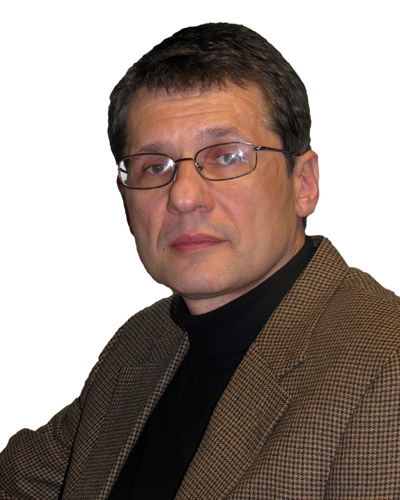
Andrey Chabanov, Professor of Physics and Astronomy, University of Texas at San Antonio – Photonics, Wave Phenomenon in Periodic and Random Media
Title: Gyrotropic Metamaterials: Advancing Nonreciprocal Photonics and Electronics
Abstract: Ferrite materials biased by an external magnetic field are the most common gyrotropic media used in nonreciprocal electromagnetic devices such as isolators, circulators, and nonreciprocal phase shifters. This traditional approach involves using bulky magnets, which can pose a problem for compact devices and those with large apertures. Alternatively, permanently magnetized materials such as hard ferrites and ferromagnets with high coercivity can be utilized. These materials can produce a nonreciprocal response, like Faraday rotation, even in the absence of an external bias field. However, magnetized magnetic materials generate a demagnetizing field that can be nonuniform, depending on their shape. This nonuniformity can significantly impact the performance of the nonreciprocal device. Another issue with magnetized materials is the presence of stray magnetic fields around the device. Some critical applications, such as inertial navigation and quantum sensing, cannot tolerate even tiny magnetic fields; yet, they still require a nonreciprocal component to function properly. To overcome these problems, we propose a fundamentally different approach to achieving Faraday rotation: using gyrotropic metamaterials with tailored magnetization, including configurations with zero net magnetization, which do not require a bias field. Without bias and demagnetizing fields, the aperture of this Faraday rotator can be virtually unlimited. Utilizing this method, we demonstrate uniform 45-degree Faraday rotation and effective isolation across a microwave band.

Nikole Neilsen, Assistant Professor, University of Oklahoma – Astrophysics & Cosmology
Title: Cosmic Illumination: Revealing the Hidden Gaseous Ecosystem Around Galaxies
Abstract: The flow of gas between galaxies and their surroundings is a fundamental driver of galaxy evolution, both fueling and quenching the formation of stars. Until recently, tracking this nearly invisible gas was done with a single pinpoint quasar line of sight through a galaxy. We are now stepping into a new era of observations that allow for directly tracking and mapping this gas in emission around individual galaxies in detail, with a thousand-fold increase in lines of sight per galaxy. I will present ultra-deep emission maps with the Keck Cosmic Web Imager of the gas flows around a nearby starbursting galaxy. Observations such as these are a key discovery area for galaxy evolution science in the next decade.
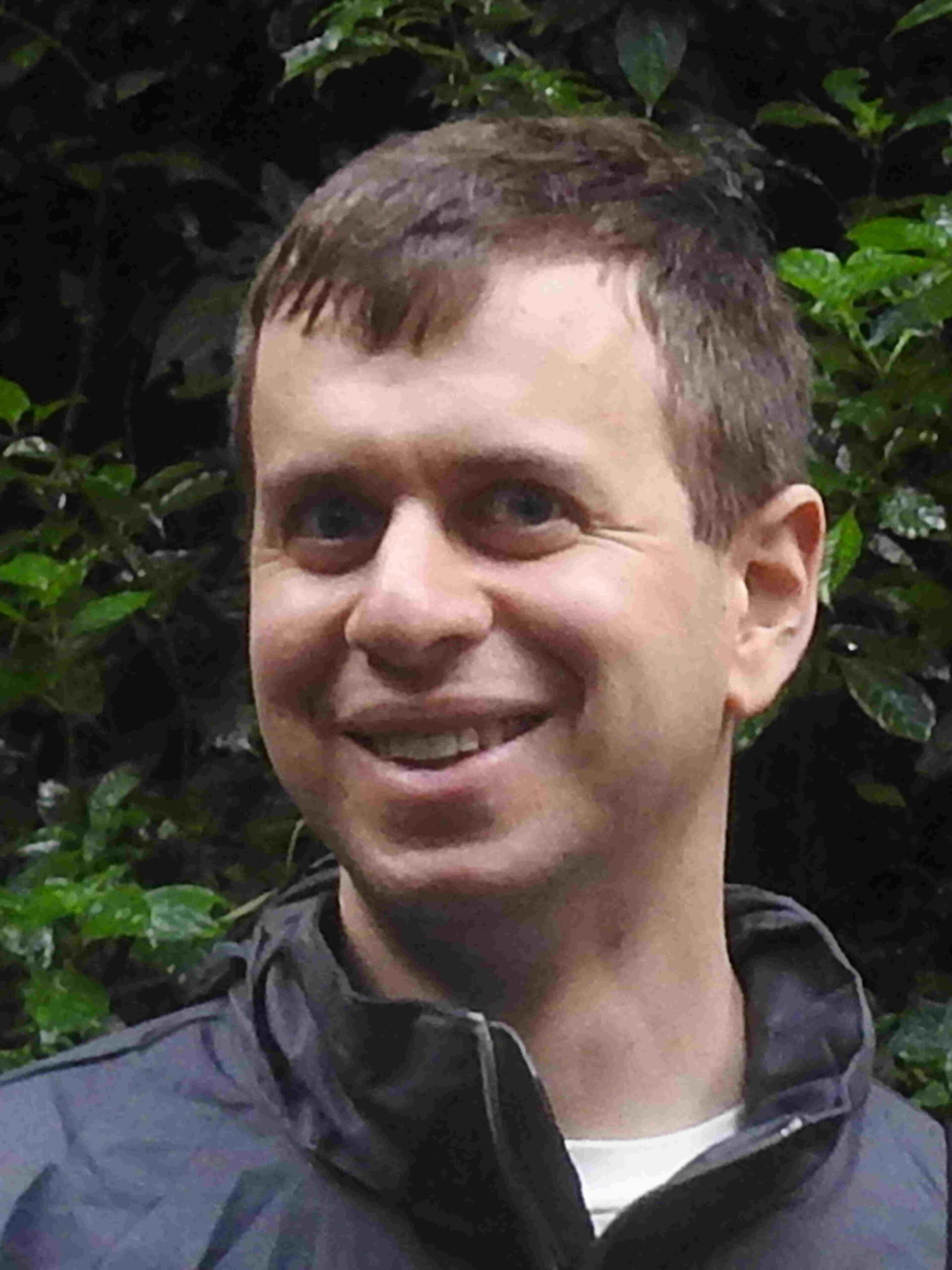
Matthew Klein, Assistant Professor of Physics, Southern Methodist University – Experimental Particle Physics
Title: Hints of new physics in the Higgs sector at the LHC
Abstract: The data collected by the ATLAS detector at the LHC from 2015-2018 and 2022-2025 has allowed for probing fundamental physics with unforeseen precision. Given the potential sensitivity of the Higgs sector to BSM physics, this has been a particularly active field of research. In this talk, I will summarize the status of SM and BSM Higgs measurements, focusing on hints of physics beyond the Standard Model. The dataset collected by the LHC experiments is expected to dramatically increase in the next 15 years, which will allow for confirming or refuting many of these potential hints of BSM physics.

Donna Stokes, Professor, University of Houston – Structure and Optical Properties of Semiconductors, Physics Education Research
Title: Creating Community Within Physics/STEM Spaces Utilizing Interest Groups
Abstract: Student success in Physics/STEM majors is challenging for many students, particularly those from underrepresented groups. Data shows that nearly half of the students pursuing a STEM degree do not earn the degree. Often, there are obstacles and barriers that prevent students from completing the degree including, parental support, financial issues and academic preparation to name a few. In addition, many students do not feel a sense of belonging in Physics/STEM spaces, whether this is in the classroom, research labs, teacher education programs and student organizations. This presentation will highlight how student interest groups have been utilized in the College of Natural Sciences and Mathematics at the University of Houston to provide students with spaces that foster a sense of belonging for persistence in Physics/STEM majors. This presentation aims to encourage conversation and ideation related to overcoming inclusivity challenges faced by students in the physics community, and to encourage everyone to consider how their own lived experiences can be used to promote a culture of support within Physic/STEM spaces.